

It's a fair question: If your speakers are already able to play deep bass, what would a subwoofer even add? Surely that's the whole point of full-range speakers?
Sometimes the answer is that no, you don't need subwoofers. But often you do. And surprisingly not just for more bass or deeper extension. So why then? Let's dive in.
First, the case for "no"
Let's be honest. You genuinely may not need one.
If your main speakers reach low enough to satisfy the music you listen to, and your room happens to treat that bass kindly, then a subwoofer may add very little. You may hardly be able to tell the difference. So if you're already happy, this article becomes academic.
But it's important to note the caveat above. It's not enough to have a speaker with plenty of bass. The problem typically isn't the speaker, but rather the room.
Extension is a property of the speaker. Bass linearity is a property of the room.
"Full-range" describes what a speaker can do on its own, measured in ideal conditions. How low it reaches before it rolls off. Accurate on paper.
But you don't listen to a speaker in ideal conditions. You listen to it in a room. And below roughly 100–200 Hz, the room starts being an active part of the system. It adds its own peaks and dips depending on room dimensions, speaker placement, and where you happen to sit.
The effect is not subtle. A speaker that measures ruler-flat to 30 Hz in an anechoic chamber can still swing ten decibels or more, up and down, across the bass region once it's in your living room.
So the deep, even bass the specs claim your speaker can deliver may be real, but it still isn't what you actually hear in your listening chair.
The bad news: Your speakers can't fully fix this on their own
No worries, you can just move your speakers around until you find a position where the bass evens out, right? I'm sure you can see the issue with that idea.
The obvious problem is that your main speakers have other important jobs too: Imaging. Soundstage. Stereo perspective. Precise placement is required to make a recording sound as real as possible. And this dictates where the speakers need to go.
The position that gives you the best soundstage and spatial qualities is almost never the position that gives you the smoothest bass. So you're forced to compromise. One speaker, one location, and priorities that pull in opposite directions.
This is the real limitation of full-range speakers. They're anchored to a position that doesn't necessarily provide accurate bass.
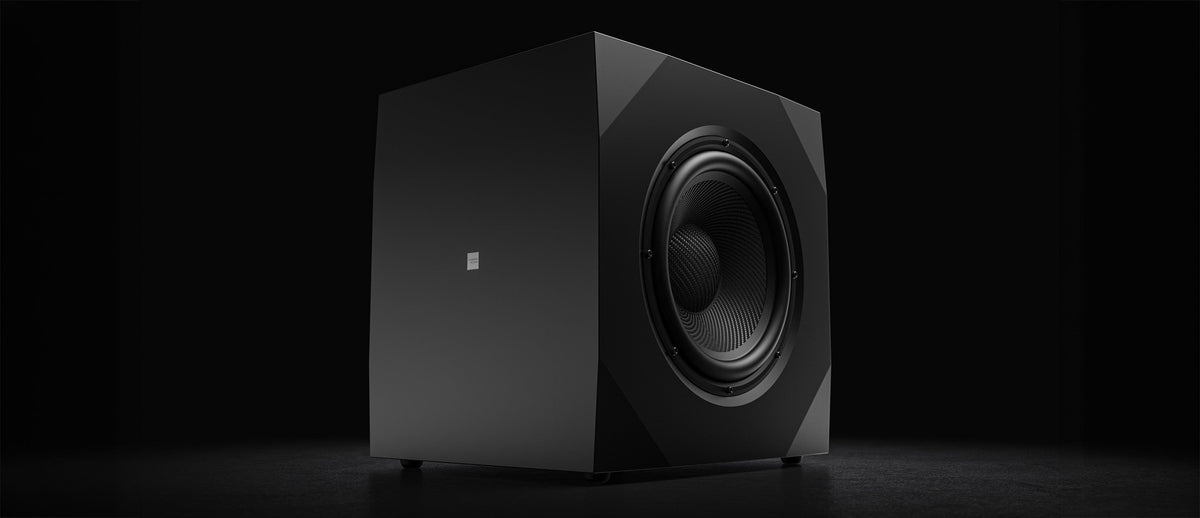
A subwoofer breaks that constraint. Because it only handles low frequencies, and because low frequencies aren't directional, you can place it wherever the bass behaves best, independently of where your main speakers need to stand. You stop compromising. Each part of the system goes where it does its job well.
This is the main argument for a subwoofer alongside full-range speakers. Not "your speakers don't go low enough." Often they do. It's "your speakers can't be in two places at once". But when you add subwoofers, suddenly that compromise goes away.
The benefit isn't just more capacity or deeper bass. It's better bass.
When you add a subwoofer to already capable full-range speakers, the improvement you hear isn't necessarily just deeper bass or more slam, though you may get that too. The bigger change is that the bass becomes more linear. The peaks that create that boomy one note bass evens out. The dips that swallowed whole notes fill in. Suddenly the bass sounds right across all tracks, rather than too soft on some tracks and too loud on others.
And because uneven bass masks and muddies the lower midrange, cleaning it up tends to make voices and instruments sound clearer too. Fixing the bass improves the perception of the entire frequency range.
None of this requires your speakers to have been lacking. It only requires your room to be.. well, a room.
Why it's preferable to have two subwoofers
I've previously written an entire article on this subject alone, check it out if you want the details.
One independently-placed subwoofer is already a large step, because it breaks the compromise your main speakers are stuck with.
But the room doesn't only misbehave in one spot. A single source, wherever you put it, evens out the bass in some places and leaves it uneven in others. The problem is spread across the room, so the fix works better when it's spread out too.
Two subwoofers, placed apart, excite the room differently from each other. Where one leaves a dip, the other tends to fill it. The peaks and nulls partly cancel out instead of stacking up, and the bass becomes noticeably more consistent, both across the frequency range and from seat to seat. It's the same principle as adding the first sub, applied once more: a second source in a different place gives the room fewer ways to win.
This is why, for most real rooms, the best answer is a pair of subwoofers. But you can of course always start with one and upgrade to two along the way.
What about room correction?
It's a common objection: can't DSP and room correction fix the room without adding subwoofers?
The answer is maybe, and partly. Room correction or manual EQ is genuinely useful, and I'm a strong believer in using it for the bass frequencies. But it has a hard physical limit. Correction can turn a peak down, because a peak is just too much energy, which can be reduced. However, it struggles to fix a deep dip, because filling a null means pushing enormous energy into a frequency the room is actively cancelling, and often the room simply wins.
The most effective fix for a null isn't more processing. It's a second source in a different location, so the cancellation never happens the same way in the first place. In other words, correction and a well-placed subwoofer aren't competitors. A system with subwoofers will have a better starting point, and the EQ / room correction will be icing on the cake.
That being said, using EQ / room correction to tame the peaks of the room is a great improvement in most systems, even though some dips may remain. It will get you good and sometimes even great bass without subwoofers if your speakers are capable.
Summary
If you have genuinely full-range speakers, listen at moderate levels, and your room happens to be well-behaved in the bass, great!
But if your bass feels uneven from seat to seat, if some notes boom while others vanish, if the low end sounds tied to the speakers rather than filling the room.. Subwoofers may be the answer. And remember that this doesn't mean there's anything wrong with your speakers. It's the room, and the same thing would have happened with any other speaker. The most reliable way to address it is one or two subwoofers you can place where the bass works, rather than where the speakers have to stand.
So to summarize, the problem was never how low your speakers go. The benefit of subwoofers is a natural consequence of how bass works in rooms.
Why we build our systems the way we do
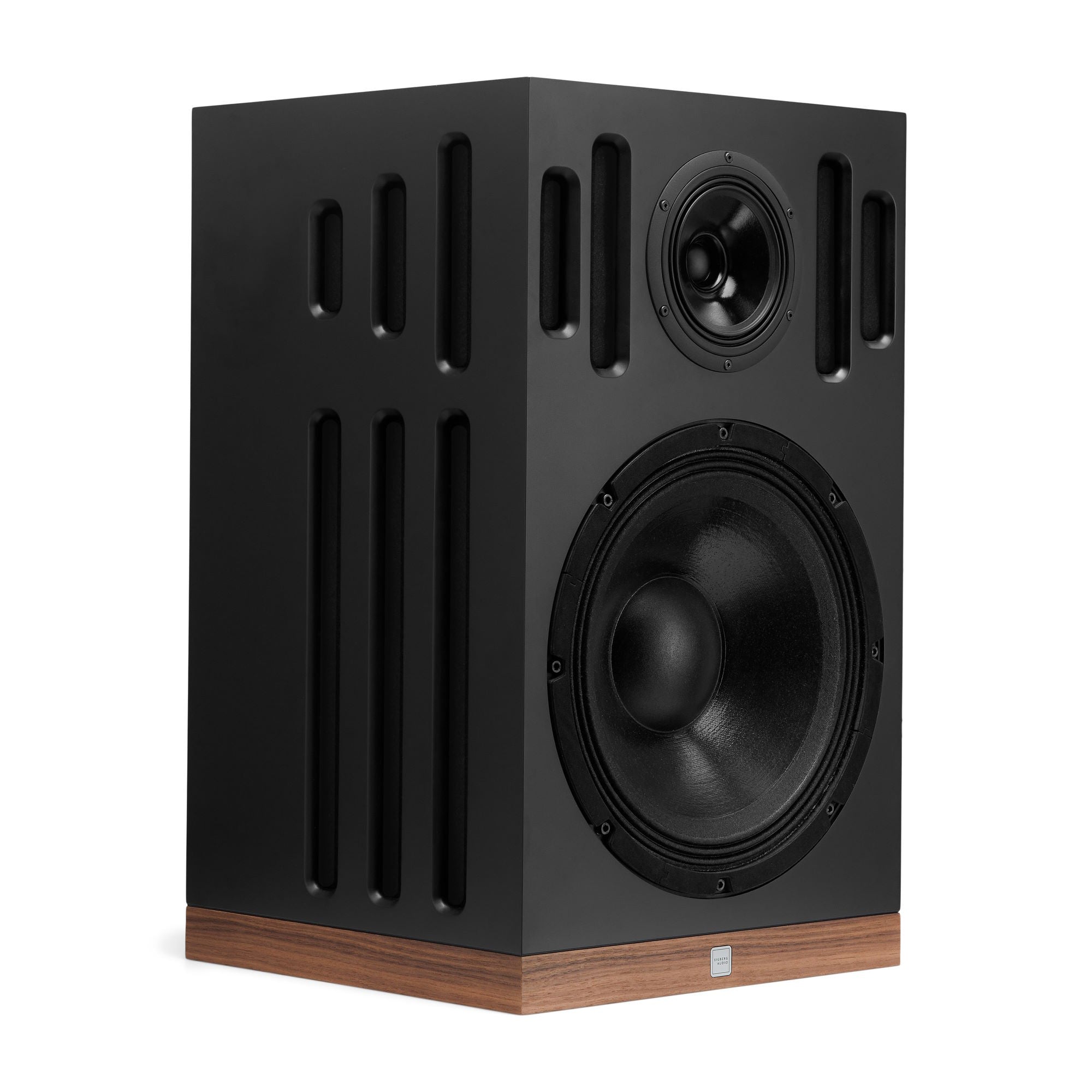
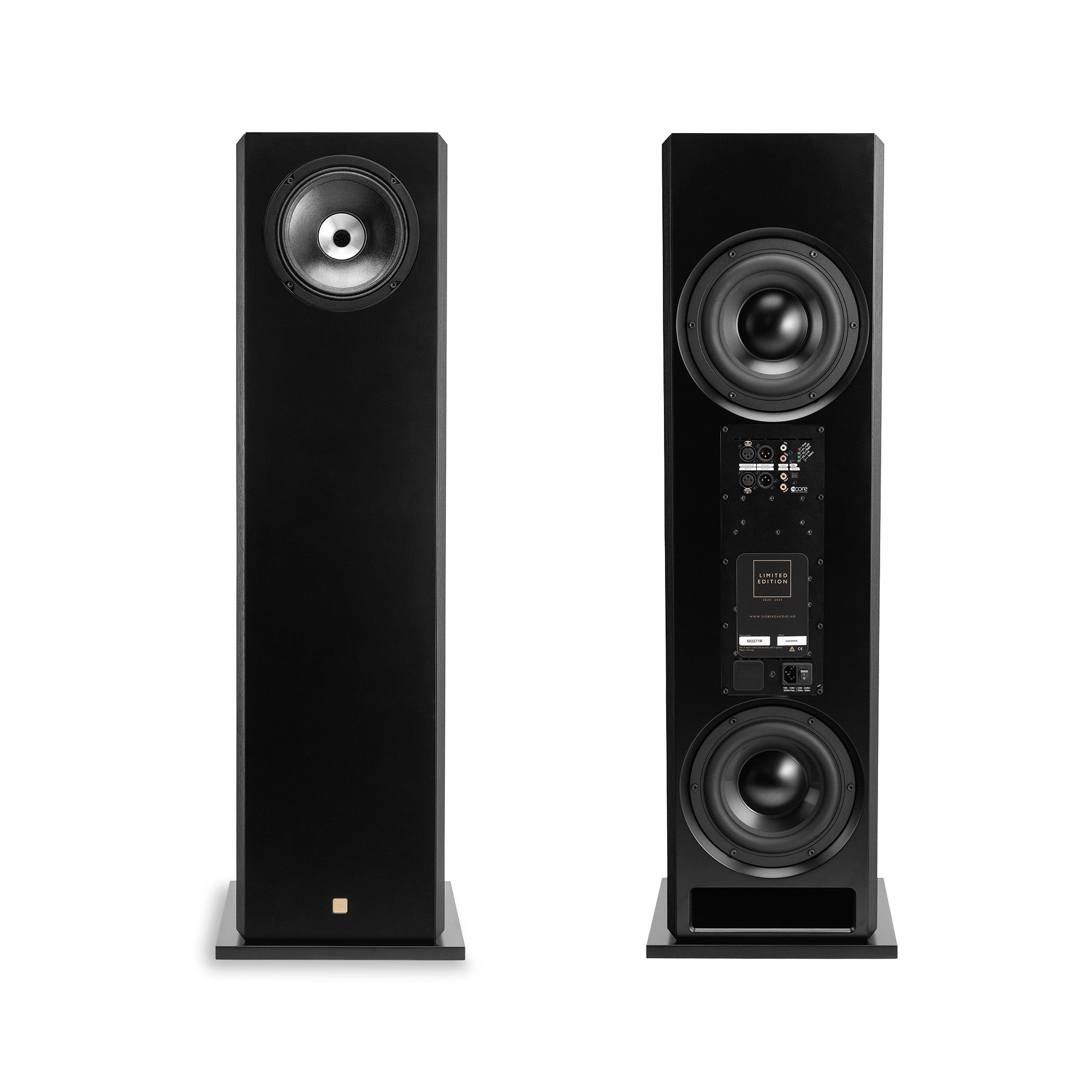
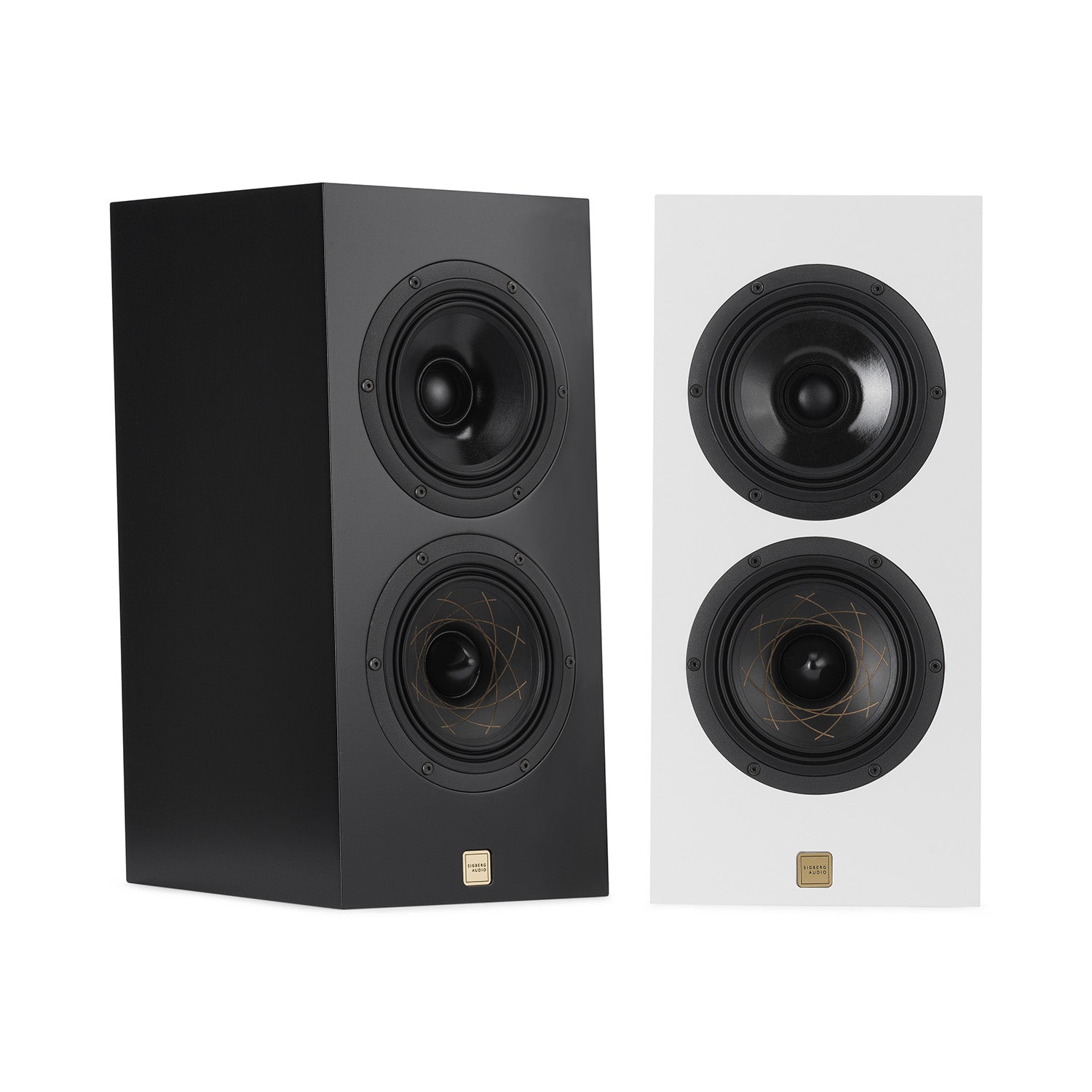
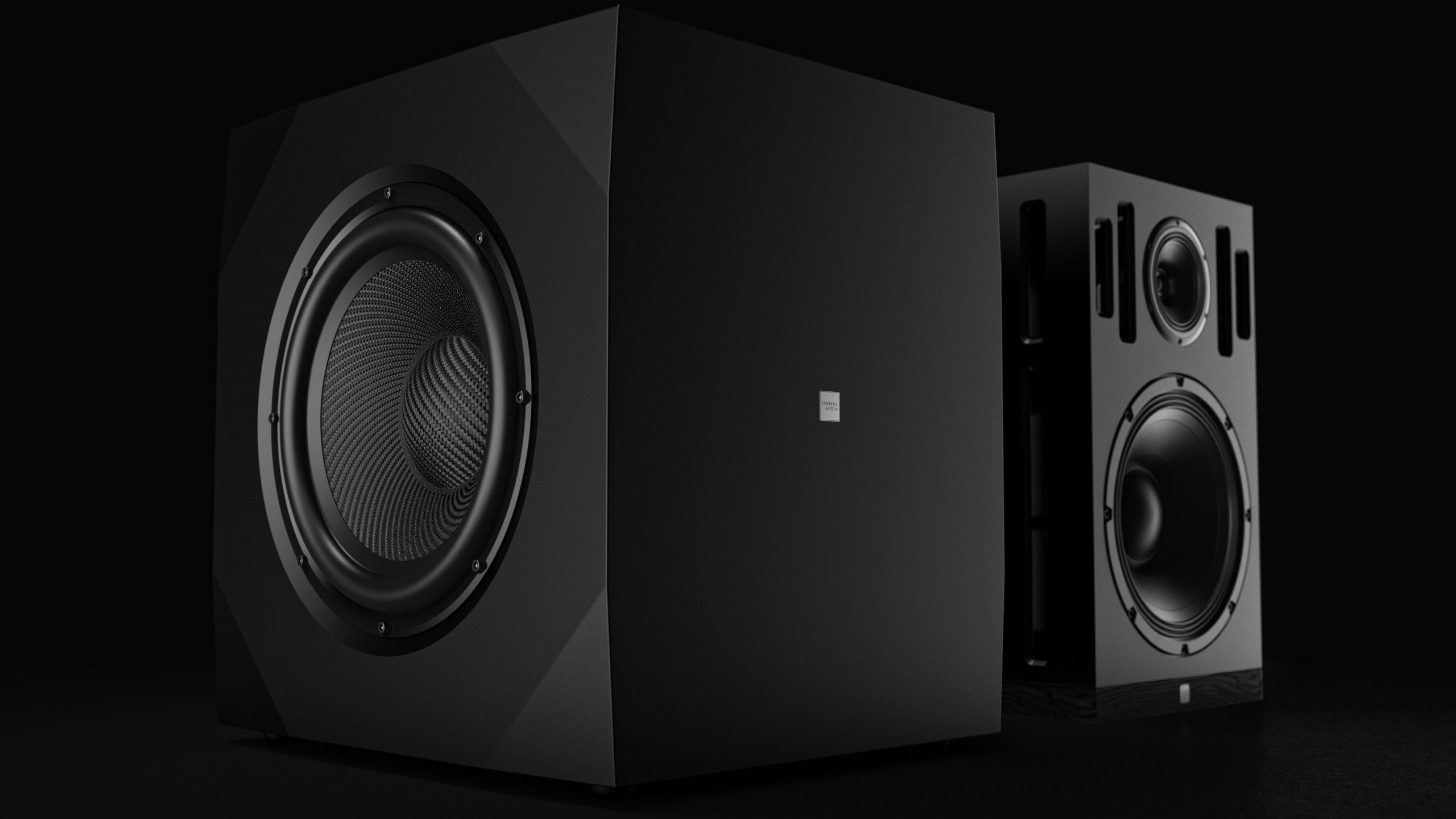
This article sums up the reason why the Sigberg Audio SBS and Manta systems are 4-way designs with dedicated subwoofers, rather than full-range speakers you might add a sub to later.
We didn't do it just for bass capacity and extension. It's simply the natural conclusion when you know how bass behaves in real rooms. The speaker and the bass modules want to be in different places in a real room, and the only true way to solve that.. is to let them. Integrating the subwoofers into the system from the start means the bass can be placed and controlled independently.
So when I say you probably need subwoofers even with capable speakers, it's not just a sales pitch to sell subwoofers. It's the same conclusion we designed our own systems around. It's an inherent design choice, because in real rooms it's the only way we've found to reliably get the bass right.
If you'd like to discuss whether this applies to your setup, reach out in the contact form below. Also, placement and setup is important, and we're happy to help you get it right!