

You bought speakers praised by reviewers, and they sounded good for a few months. Then something started bothering you. A hardness on certain vocals, a bass note that booms while the one next to it disappears. A sense that something isn't quite right when playing your favorite tracks.
You assumed the speaker was the problem, so you sold them and bought something else. That worked for a while too.
If you've been through this cycle three or four times, the most likely explanation is not that you have unusually demanding taste. It's that you've been changing the wrong thing.
Most speakers aren't designed for your room
A loudspeaker measured in an anechoic chamber is measured with no walls, no floor, no ceiling. In your listening room, most of the sound that reaches your ears has bounced off at least one surface before it gets there. What you actually hear is the sum of the direct sound from the speaker and the reflected sound from the room.
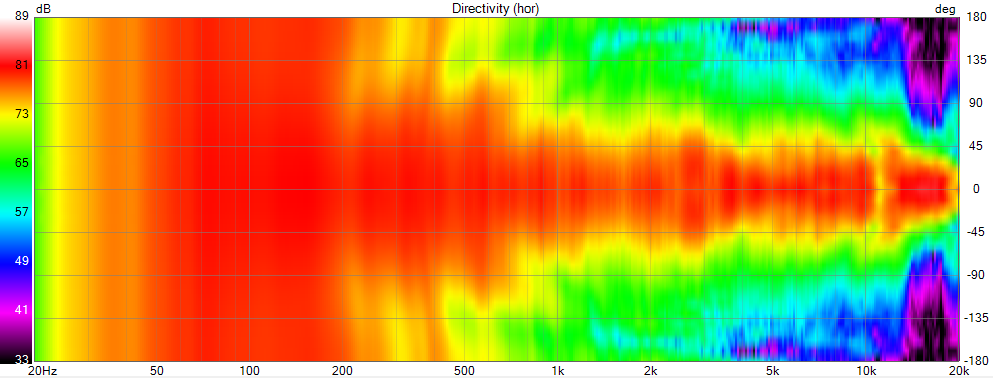
The reflected sound is shaped by how the speaker radiates off-axis, so to the sides, up, down. A speaker can measure flat on the tweeter axis and still throw wildly uneven energy into the room off-axis. This shows up as coloration, listening fatigue, and the persistent feeling that something is off. We are very good at detecting this. But it's not so easy to understand what is wrong.
This is also why a speaker that impressed you in a dealer's room disappoints at home. Different room, different reflection pattern, different sum. Nothing about the speaker changed.
This is why swapping speakers rarely ends the cycle. If the replacement has the same class of problem, you haven't really fixed anything. You just changed which frequencies are wrong. The problem isn't the speakers in isolation, but how they interact with the room.
What we do about it
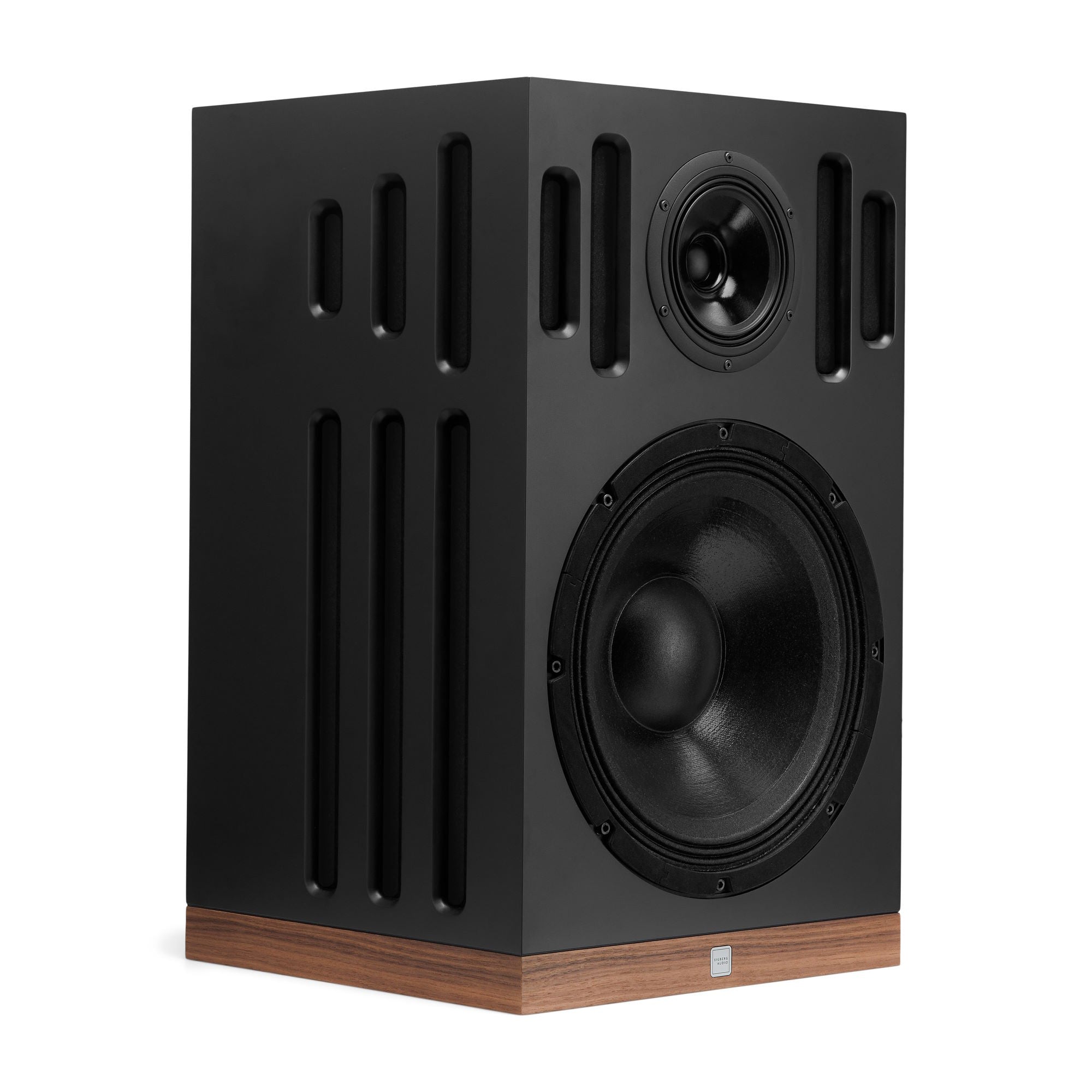
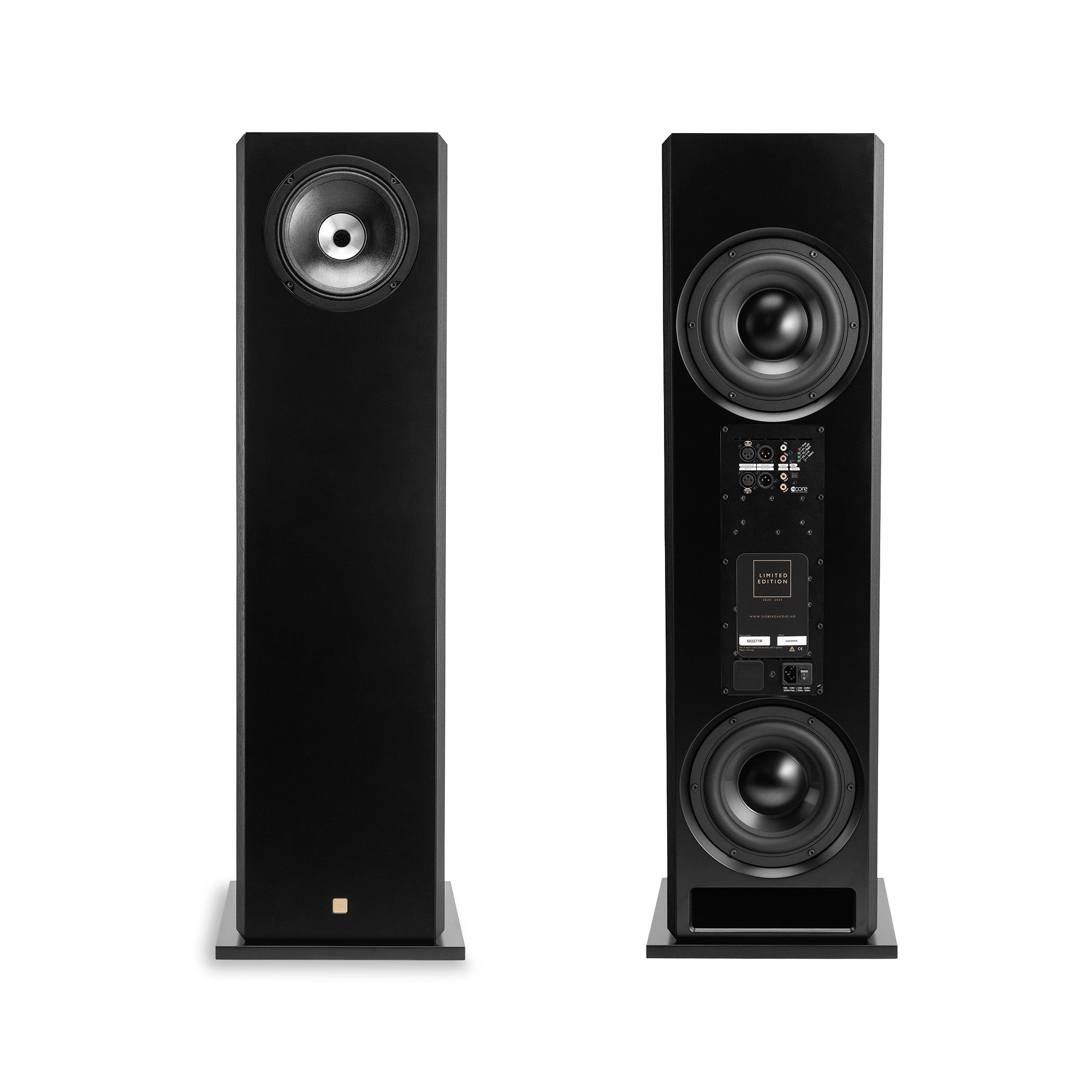
Every Sigberg design is measured 360 degrees, not just on-axis response. We design for smooth, controlled off-axis behavior so that the energy reflecting off your walls has the same tonal character as the sound arriving directly. In our cardioid designs (Manta and Saranna) we go further, implementing a way to reduce the off-axis energy.
Less energy hits your walls in the first place. Less reflected energy, more direct sound. Better sound.
Below a few hundred hertz, the room decides what you hear
In the bass region, your room's dimensions create standing waves. At your listening position, these produce peaks and dips of up to 10dB and sometimes even more. Some notes will be twice as loud as their neighbors. Others will nearly vanish.
That is a larger difference than exists between any two competently designed loudspeakers. It swamps everything else. No cabinet, driver, or crossover design overcomes it, because the problem isn't in the speaker alone. It's the combination of your room, speaker placement and listening position.
Three things genuinely help:
- Spend time experimenting with speaker positioning and listening position. Often alternatives are limited, but getting this as good as possible will improve the effect of subsequent steps.
- Two or more bass sources (aka subwoofers) in different positions excite the room modes differently. Where one has a dip, another has output. The result is more even bass.
- Finally; measurement-based correction. Once you've measured the response at the listening position, the remaining modal errors can be corrected with DSP. Full range correction can be challenging, but in the bass, EQ/DSP is the right tool.
Every Sigberg system is delivered with measurement-based tuning for your room and your preferences, included in the price. Not because DSP is magic, but because the modal errors in your room are the largest single deviation in the entire system. And it's the one thing you cannot fix by choosing a different speaker.
The reason the cycle repeats
Look back at your purchases. How many of them did you make on the basis of measurements? Or knowledge about how your current system interacted with the room?
You likely made them on the basis of reviews, forum consensus, perhaps an audition in a room that wasn't yours. So the cycle continues, because each purchase is a guess, and a guess has no reason to converge on an answer. It's random every time.
The way out is boring but effective: measure your room. A calibrated microphone and free software cost less than a set of speaker cables and will tell you more about your system than every review you have ever read. You may discover your speakers were never the problem.
And when you do buy again, ask the manufacturer for their measurement data. You don't even have to understand it, just check if they can produce it. If they can't, or won't, that tells you something. It means they're asking you to buy on faith. And faith is what got you four speakers deep.
Sigberg Audio publishes full measurement data for every product we make, including the measurements that don't flatter us.
If you want to talk through what's happening in your room before you spend anything, contact us at the bottom of this page. We may recommend our systems. We may also talk you out of changing anything. Because the speakers may not be the problem.